NOLAN COOLEY | HAPPINESS by Margaret Hernandez

Nolan Flyer.jpg

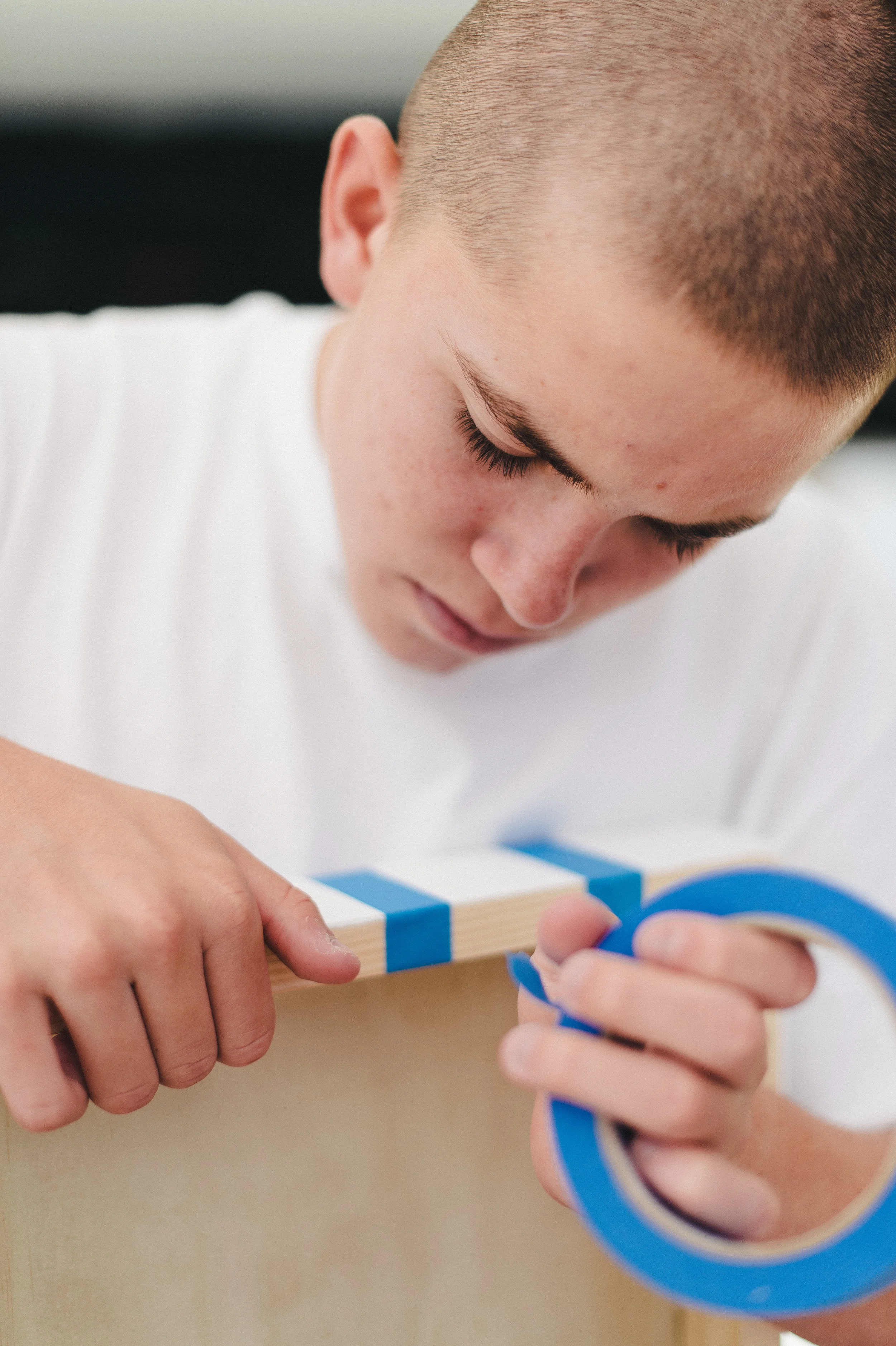
Nolan is a talented artist living with Autism

Nolan’s creative spirit came to fruition when he obsessively started creating repetitive pattern art at the age of six. Now 7 years later, Nolan has amassed a large collection of artwork – expressing his creativity and pouring out his passion on everything from canvas to surfboards to skate decks, and more. Nolan is excited to share his vision and inspire everyone with his art. Nolan would like to welcome you to his show “Happiness.” 

Photos by Dominic Cooley 

About the artist

ALLISON RENSHAW | EMERALD CITY by Margaret Hernandez

IMG_3560.JPG

Q & A with artist ALLISON RENSHAW

What are you currently reading, listening to or looking at to fuel your work?

I am currently reading "H is for Hawk" by Helen MacDonald, which I wouldn't necessarily say is “feeding” my work, but I do think that everything we experience, read, and see has influence.  It is a non-fiction work about a woman who loses her father and turns back to her passion as an experienced falconer to work through her grief.

I listen to all sorts of music while working in the studio, I can’t stand silence in the studio!  I also look at so much work either online, or in person, I love looking at what other people are doing and making.

Another book that really fed my work was "The Night Sky, Writings on the Poetics of Experience" by Ann Lauterbach.  Her investigation of ‘whole fragments’ really struck me especially.

What are your biggest challenges to creating art and how do you deal with them? How do you navigate the art world?

I think finding time to be in my studio is the biggest challenge.  I am a full-time mom and I am also very active with teaching art and fitness classes, so juggling my schedule is often very difficult.  I think navigating the art world has become easier with the internet, but there are still ups and downs.  It is pretty amazing to be asked to be in a show because someone saw you on a blog somewhere, as before we used to send slide portfolios out.  

What mediums do you work with? How would you describe your subject matter?

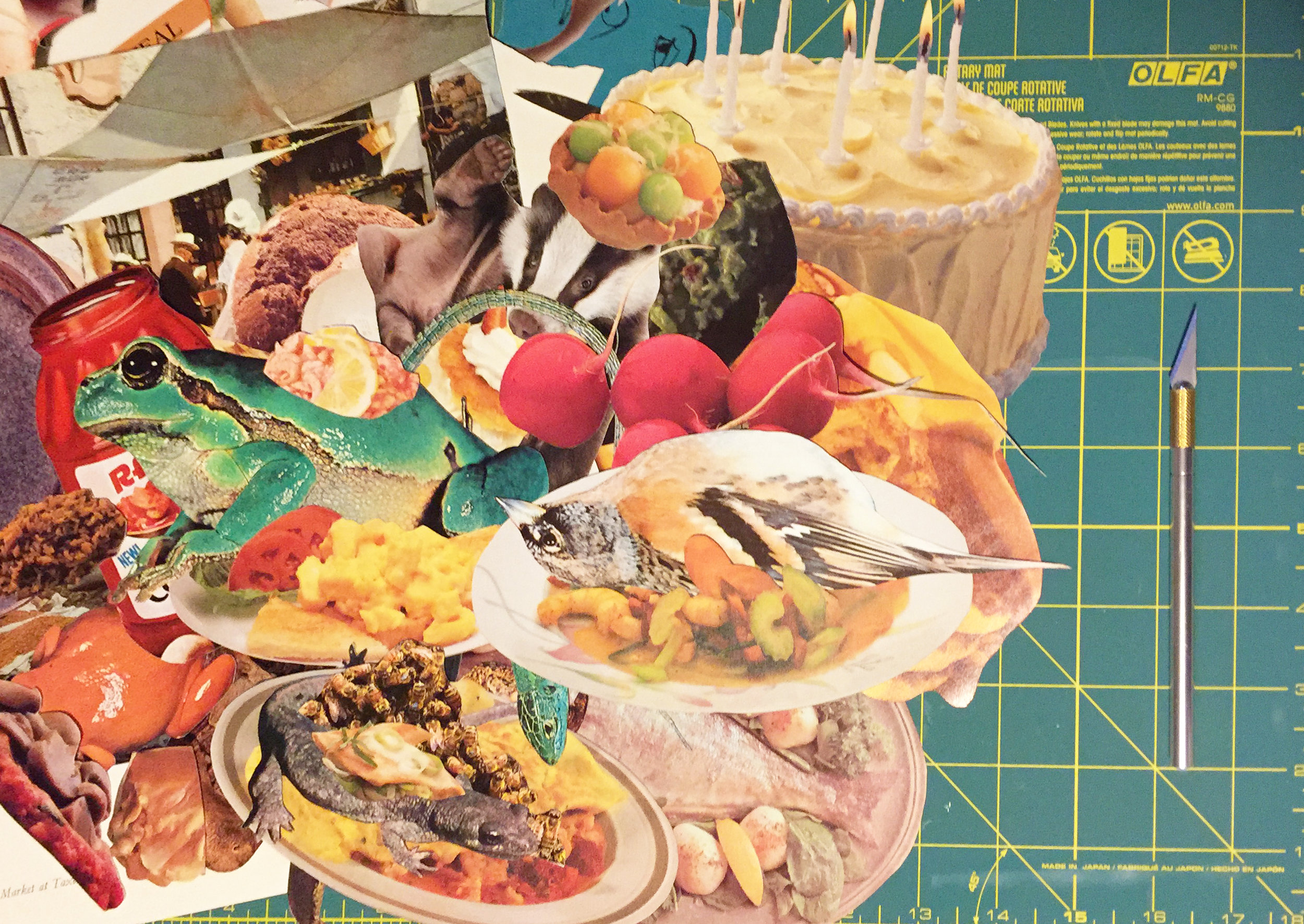
I work with a lot of media:  acrylic, oil, collage, spray paint, ink, paper, canvas, panel, etc.  My paintings are informed by particles of our urban landscape and our culture found in the everyday. Fashion, modern architecture, and the natural environment combine and collide in my work. In this setting, elements of plasticity and temporality are depicted in a suspended state of in-betweeness. I create a universe that is seemingly random and difficult to decipher. This chaotic quality becomes an apt visualization for today’s open-source culture of sampling and recycling. Lines between the organic and the man-made become blurred and a larger narrative is evoked through a banal fragment.

When people ask you what you “do”, how do you answer?

I usually say I am an artist.  If they ask more specifically I usually say a “mixed-media painter."

Describe a childhood memory that has influenced your artwork

I would have to say all of the time we spent outdoors camping, skiing and visiting beautiful places.  I remember always drawing.  

But also, the death of my father at age 5 and the death of my mother at age 26 has influenced the work off and on or maybe even always in the background.

Has there been a shift or change in your life or work that has led to what you’re making now? Do you see your work as autobiographical at all? 

I see the physicality in the work and the temperament being autobiographical, but I don’t see a shift that has happened recently.  It is a process that continues to feed into each new piece.  I recently went through a couple of years dealing with some bad sciatic pain which ended up requiring surgery, but I don’t necessarily see that in the work.  Maybe a few years from now I will be able to look back and see that.  Sometimes it takes a few years to fully understand why I made the work I did.

What is your personal message to your artwork and how does that connect to a communal and universal message?

I am interested in how cultures combine and collide and become something new.  I feel like we are just bombarded daily by images, fragments of images, and cultural differences at high speed.  The internet has made sampling, recycling and appropriation the norm now.  I am attracted to the idea that combining such fragments creates a collage that becomes its own thing entirely.

Do you intend your work to challenge the viewer?

I am not sure that “challenge” is the right word, but engage would be a good one.   I very interested in the idea that we each have our own personal experiences and baggage.   An individual fragment can elicit something completely different from viewer to viewer depending on his/her own awareness, which in a strange way, makes the viewer part of the collage.

Is the creative impulse driven by a personal need to ease pain and/or satiate desire?

Yes and yes!!  I find that I need to make work even if nobody ever outside the studio saw it again.  I also have found that in difficult times in my life, my art has saved me.  I am a process art maker and loads of the pleasure is derived from just the making of it.  It is funny how sometimes artists don’t discuss just how much “fun” making art is.

What three things never fail to bring you pleasure?

My family, exercise, Mexican food.

Whats your motto?

Go big or go home!

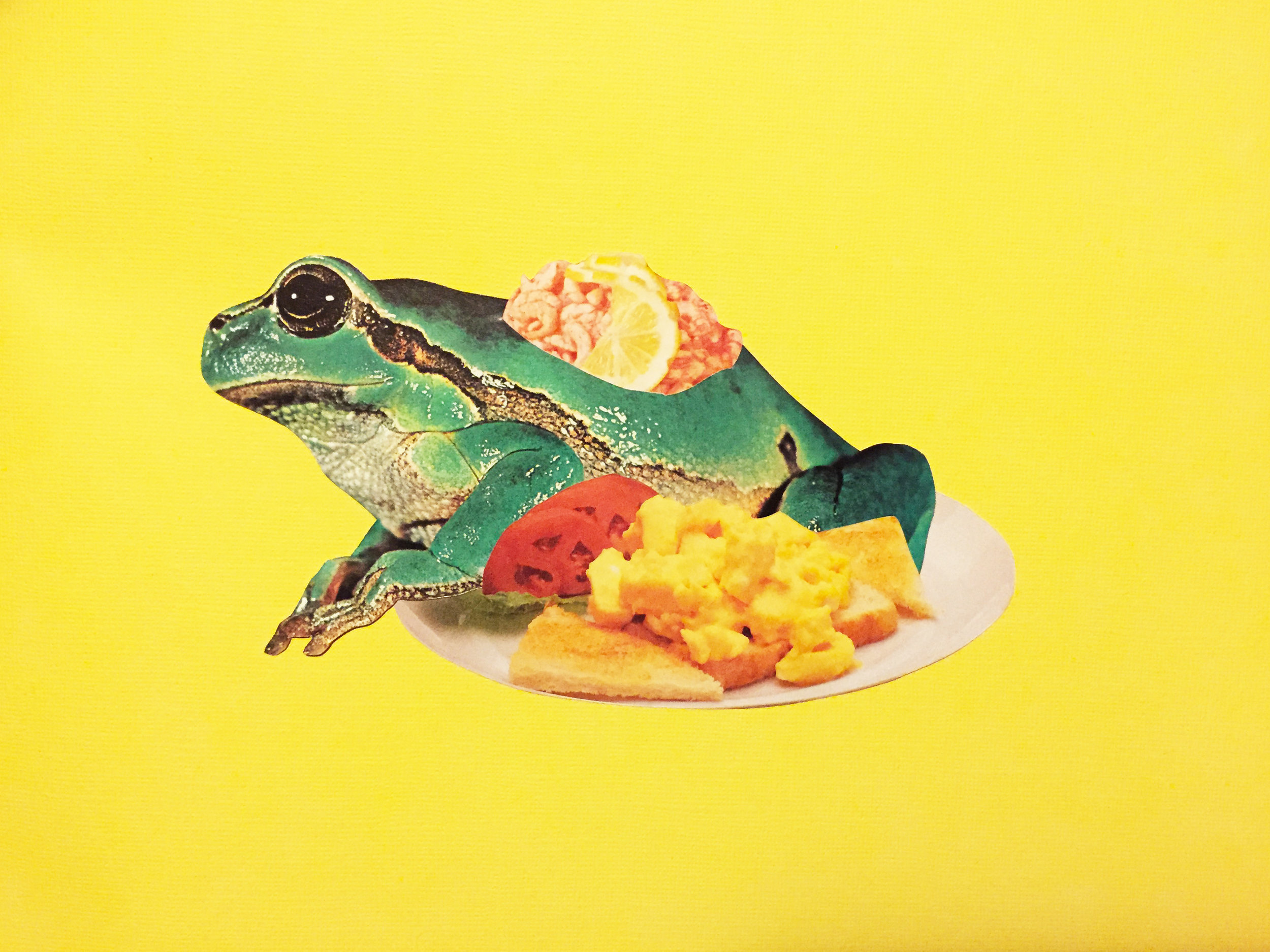
JUAN BEAZ | ALIMENTOS DEL MAGO by Margaret Hernandez

SOLO EXHITION FEATURING NEW WORKS

BY 

JUAN BEAZ 

OPENING RECEPTION SAT MAY 6TH 2017


SHIRIN TOWFIQ | SOFT & SENSITIVE — AN INTERDISCIPLINARY PROJECT ODE TO SOCIAL CHANGE by Dorian Maldonado

Shirin Show Card.jpg

The Hill Street Country Club & Linksoul presents:

soft & sensitive

an interdisciplinary project ode to social change
by Shirin Towfiq

Opening reception: Saturday July 8th 7pm-10pm
Location: Linksoul Lab 530 South Coast Highway, Oceanside CA 92054

Q&A with artist, Shirin Towfiq

Why soft and sensitive ?

Soft and sensitive was made from a place of just being tired and aware of everything that’s going on right now in our society and not wanting to be angry anymore and shifting to this place of becoming vulnerable.


Do you practice a faith? What is it ? Did your faith give you the strength to use your voice to ignite social change?

I am a member of the Baha’i Faith, a world religion that believes in all of the past major religions and one God. The Baha'i Faith's goal is to unify the world so it’s very social action and grassroots based. It’s about getting people to care about their communities and being of service in their daily lives. 


How do you decide what community to inform and create with?

I’m open to anyone that reciprocates my openness I think. I often don’t make premeditated decisions on who I work with but it comes organically out of the people I meet in my life. I don’t make my work for any specific audience but it is very much in dialogue with women of color- communicating to them and people who are not them. 


What's the significance of bread? How does it convey the message of social change?

Bread is historically thought of as a basic human right in almost every culture. A comfort that everyone deserves. Nowadays, bread is easily accessible in our society through the industrialization of food production; it’s not “bread” that we need anymore, now the basic human needs are immaterial—equality across all people, access to education, justice.

Do you find yourself overwhelmed and unheard?  What personal andsocietal problems leave you feeling soft and sensitive ?


What makes me soft & sensitive is the lack of understanding and compassion in my world. Where the world is at right now is overwhelming but that’s more reason to work hard, get involved in social causes, and to be on our best behavior towards others to changeour own families, and then our communities, and so on. Even the smallest actions are impactful and heard. The practice of making these videos for the show is personally important even if it's just for me to grow out of these places that make me feel like giving up and instead keep working towards these goals. 


How does this series relate to you personally?  Do you see the communal and universal connection from that? If so explain the relation. 

The series contains struggles and realizations/awakenings, this is naturally a part of my life and all of our individual and social lives, as humans we are highly affected by others and our environment. The series is not meant to show one specific social problem or solution but to suggest many different readings.


Most of your video work has no sound? Why is that?

I think there should be more instances of quiet, and it’s often not given to us. The work is allowing more of that space for reflection and bringing safety. 


How did you choose the people in your video? Mostly women and why? And why aren't you in the videos?

I wanted a range of people from many backgrounds, including a wide variety of ages and colors along with gender. The people in the videos are who I had access to and who were ready to volunteer to be part of a project like this. I’m in a few of the first videos but quickly realized I needed to be directing people and how they’re moving from the other side of the camera to get what I want.  


What are your HOPES for the world?

For there to be more empathy, compassion and understanding. 

How often are you eating bread and what's your favorite?

Ha probably everyday, I’m either eating sangak (a persian flat bread), or Bryan Truitt’s homemade sourdough bread. After eating his bread I can’t enjoy other breads anymore, it’s so good, he mills his own grains and makes everything fresh. 


Will you continue to expand soft and sensitive ? What would you include?

I still think that these are the beginning stages of the soft and sensitive project. It’s hard to say what will happen next, that comes with reflecting on the pieces over a period of time and getting more critiques on it.

Your favorite artist?

Jon Rubin.

Do you use your art to offload?

Definitely. I use it to work through my own personal problems even when the work may seem distant from that. 

What music do you listen to?

I’m not even sure, my taste in music is pretty eclectic. When this project started I was listening to Solange’s album A Seat At The Table non stop. 

What's your racial background and do you believe in intersectional feminism and why?

I was born here in Oceanside to two persian immigrants, so yes. 

What's a childhood memory that's still vivid today?

I used to wake up early every morning and walk to my grandmas house where she would braid my hair and feed me until my mom came to pick me up for school with my brothers. That moment we shared every morning makes me happy when thinking back on it. 

Youre a young woman. Where do you see yourself at 40?

Teaching and making art non stop still. 

Maybe even owning a business. 

Has your family played a role in your art?

I think so, often I consider them when I make my work. Their stories, who they are, who I am in relation to them. 

Is there a quote that best destined this body of work? 

I like this one: “The realities of things have been revealed in this radiant century, and that which is true must come to the surface. Among these realities is the principle of the equality of man and woman--equal rights and prerogatives in all things appertaining to humanity.” - The Promulgation of Universal Peace

BRIDGET ROUNTREE | VALUABLE CONTENT by Margaret Hernandez

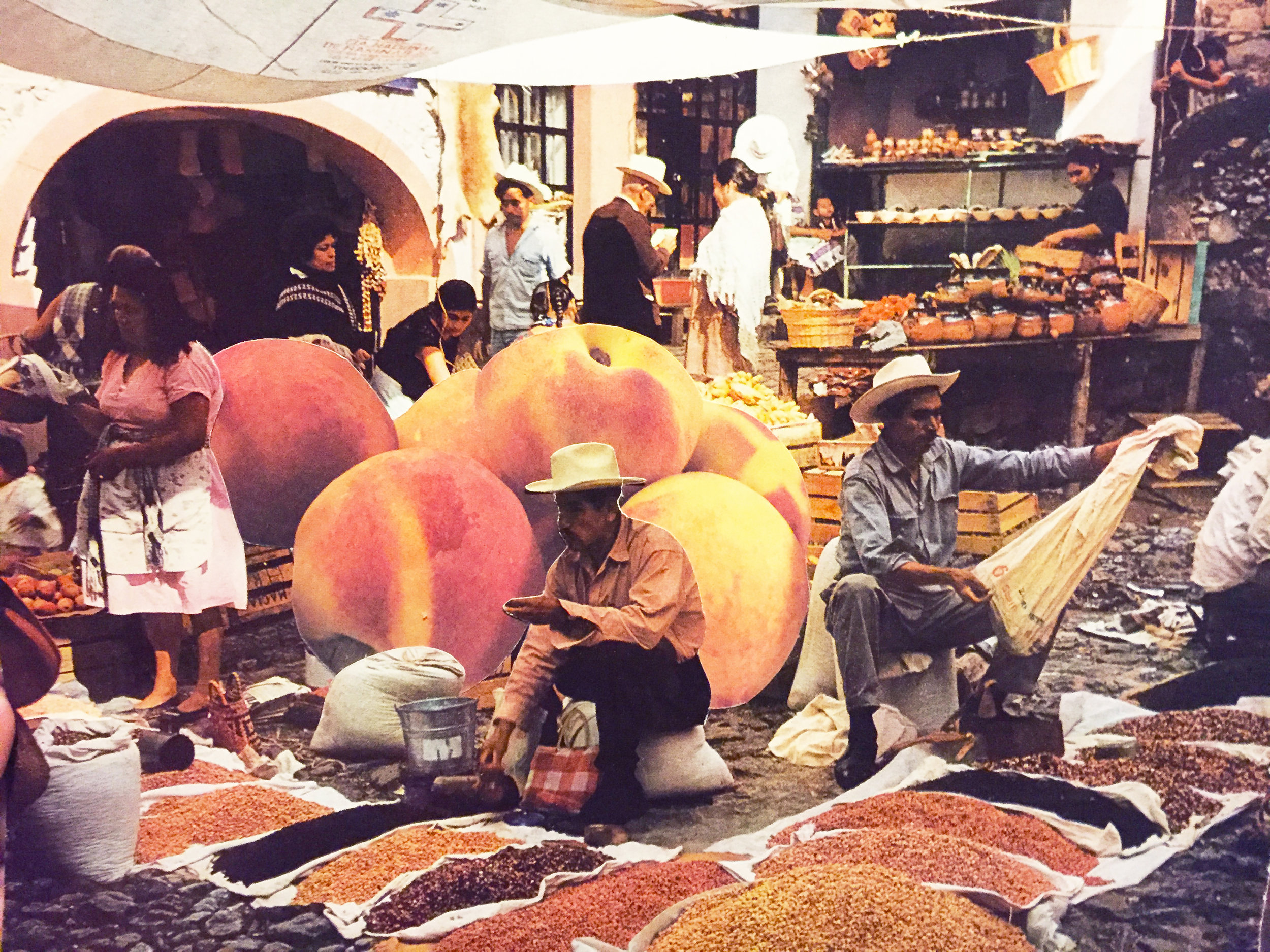
Valuable Content Juxtaposes social, political and art historical imagery as to question precieved value and generate discussion of content within a visual language. The works look at the everyday world wit the idea that we are not only passively intreating with the environment; we are actually actively thinking it. By challenging dualist representations of the savor and saved, winner and loser, victim and rescuer, the artist seeks to query the ideas and philospies that lead to hierarchal structures of thought. A simultaneity of perspectives occur by reading one image through the other, opening up a new space between what is considered to be known, and what remains unknown. Portraits are dissociated from their original context, by which the system in which they normally function is brought into question. Exploring found imagery becomes a way to revitalize, reorganize and revel the possibility of new relationships among previously defined histories.