MEGAN WIRTH I FIFTH GRADE CRAMP by Margaret Hernandez

FIFTH GRADE CRAMP

The Hill Street Country Club presents recent works

by Megan Wirth

Q & A artist

What inspires your work?

Visually my work is an escape from reality, and that’s exactly how I feel when I make it. I create a whimsical world I would want to live in, but I still can’t ever fully escape the gritty aspects of life. Either the subject matter or the way the materials are used departs from a perfect fantasy-land. It’s bright and energetic, but messy and awkward..


Upton I AL-SAHRA by Margaret Hernandez

AL-SAHRA

The Hill Street Country Club presents recent works

by Upton


Q & A artist

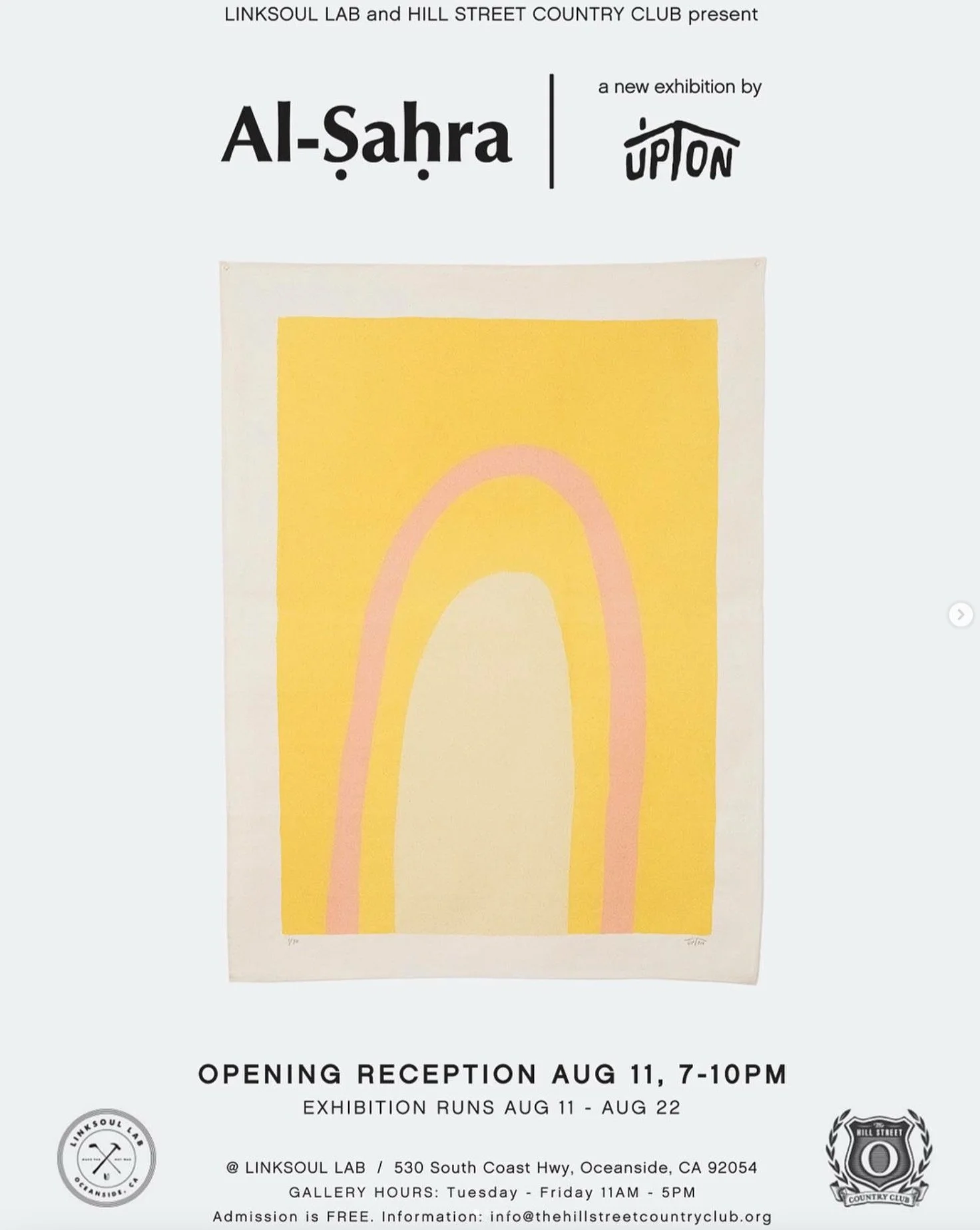
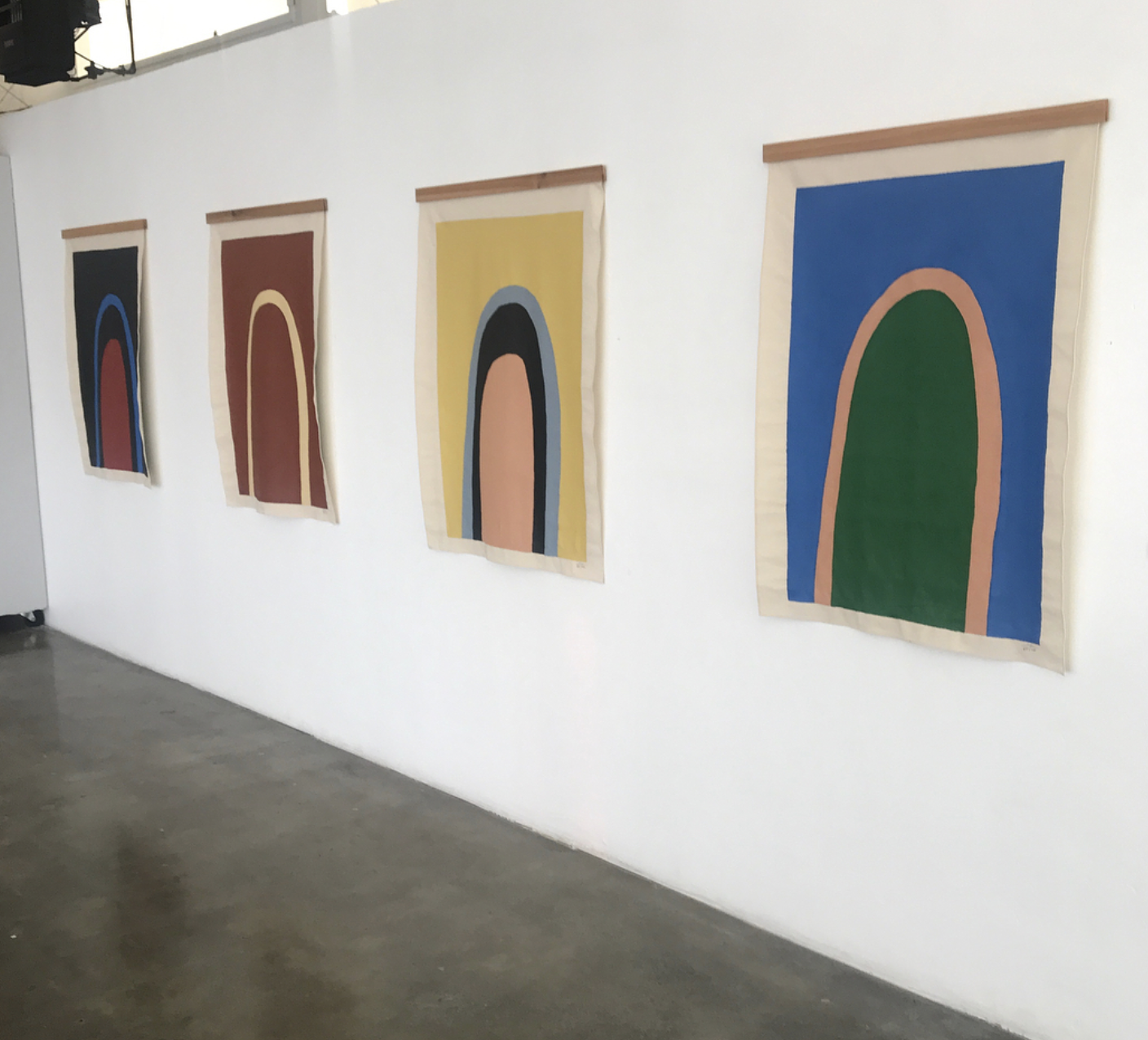
Al-Sahra will be a running exhibition of work by Mike Upton which reflects upon a middle ground between fine art and home decor. The exhibition will be closing on August 22nd withholding an array of artwork meditated towards acquiring substantial artwork in the general community’s home.

Can you tell us about your themes as an artist?

I strive to bring high-quality artwork to the everyday home and believe everyone should have the opportunity to live with beauty. My handmade limited-edition artwork is affordable and approachable, without sacrificing quality.By creating work that resists rigid explanation and using shapes that feel familiar while not always being immediately recognizable, I leave space for the viewer to interpret meaning through their own personal lens.


HARLEY CORTEZ | ASHES OF US by Margaret Hernandez

ASHES OF US

The Hill Street Country Club presents recent works

by Harley Cortez


Q & A artist

Can you tell us about your early years of life?

Growing up in Inglewood, CA. as a kid (then moved to Queens NYC in high school). I was a loner, an outsider in a way. I was always doing something pretty crazy or out there. I was a latch-key kid; no dad, my mom worked two jobs. There were alot of [crack and heroin] dealers on my block. Across the street, after 10pm, a line of prostitutes would come out - i didn't know they were prostitutes back then - and they were friendlier and made sure no one hurt us if we were out late. There was a lot of danger for a little kid, but my mom was never home so we did whatever we wanted and got home at crazy hours. Lots of shootings, lots of insanity, but somehow we managed - me and my brother.

How did you become interested in the arts?

I guess to stay out of trouble I spent a lot of time alone and read alot and drew alot and wrote alot too. Creating became a sanctuarary from the madness. Til this day I associate it with a very spiritiual act in a way - it is when i am closest God (whatever that means).
My mom believes in angels, told me I had one as a kid, maybe that's something.

CHARLES SNOWDEN | NOTHING LASTS BUT NEARLY EVERYTHING LINGERS by Margaret Hernandez

CSnowden Show Card.jpg

NOTHING LASTS BUT NEARLY EVERYTHING LINGERS

The Hill Street Country Club presents recent works

by Charles Snowden


Q & A artist

What are you currently reading, listening to or looking at to fuel your work?

I’m reading books about artists I admire and their practice. One book that stands out is seeing is forgetting the name of the thing one sees, a biography of Robert Irwin. I listen to music that’s depressing for the most part. Lately, I’ve been trying to limit the amount of artwork I view whether it’s through visits to LA, artist talks, or social media. Despite the linear evolution of my work, I am constantly pulled in different directions by the information surrounding me. I’m trying to get better at filtering my influences.

What are your biggest challenges to creating art and how do you deal with them? How do you navigate the art world?

One of the biggest challenges I face with creating art is determining whether my work is worth it or not. I think about the idea that there isn’t a need for another straight, white male's voice in art. I am aware of the privileges that I’ve been granted based on my demographic and how that might shape my practice. I can’t escape who I am and that I want to make work based on personal experiences. However, I can make work that is sensitive, empathetic, and self-aware in the hope that there is a universal message or experience to walk away with. 

What mediums do you work with? How would you describe your subject matter?

I work with clay almost exclusively at this point, but I am not committed to the medium so we’ll see where that goes. My subject matter deals with a human desire for intimacy and connection set against feelings of distance and detachment. 

When people ask you what you “do”, how do you answer?

I’m an artist. 

Describe a childhood memory that has influenced your artwork.

I grew up listening to Motown and soul music with my mom. I used to dance with her while standing on the back of our old burgundy couch so that we were at the same height. A lot of times I find myself working alone in the studio while dancing and singing to the same music. 

Has there been a shift or change in your life or work that has led to what you’re making now? Do you see your work as autobiographical at all? 

Of course.

What is your personal message to your artwork and how does that connect to a communal and universal message?

I’m trying to visually represent emotional states that are difficult to articulate, even when the memories that perpetuate them are easy to hold onto. Anyone who has felt connected to a particular person, place, or object has also dealt with loss and the feelings that come with it.

Do you intend your work to challenge the viewer?

With my work, I think that it depends on the viewer. 

Is the creative impulse driven by a personal need to ease pain and/or satiate desire?

Both.

What three things never fail to bring you pleasure?

Olives, bread, and cured fish.

Whats your motto?

I don’t have one.

JOACHIM CASTANEDA | STICKS VERSUS STONES by Margaret Hernandez

JoachimFlyer.jpg

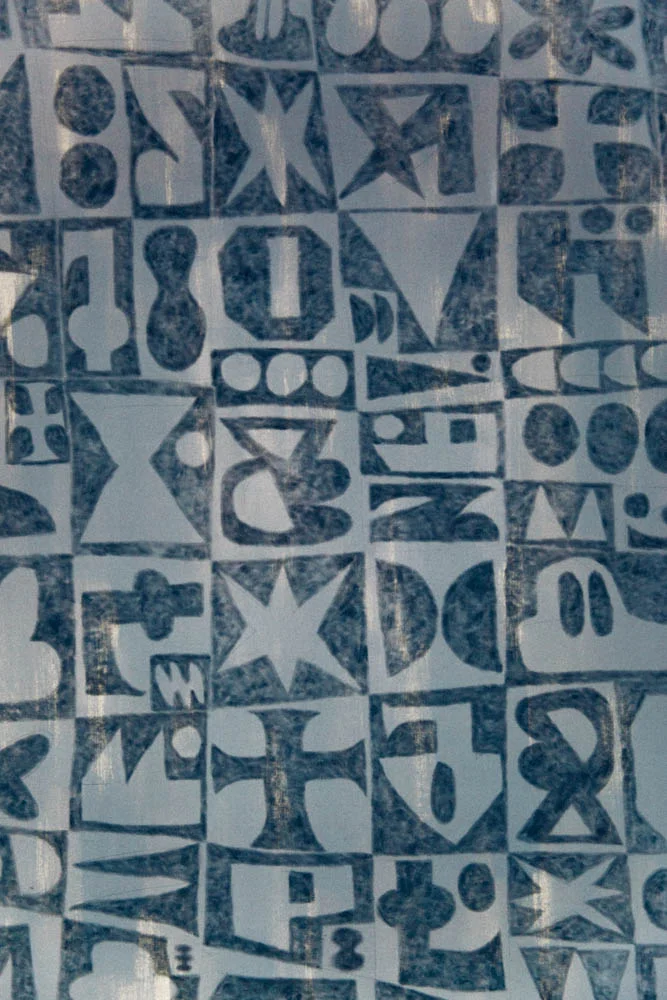
A multidisciplinary artist that makes mixed media assemblage works and paints applied expressionist canvases.  The work it self speaks about the abstraction of language and the perception of it’s messages that barrage every corner of society.  Using bold shapes and distinctly highlighting positive and negative spaces, Joachim uses nuances found his works to blend the facts and truths.   Taking a cue from amateur sign paintings, ignorant (naïve) graffiti, and pre-Colombian textiles found through out Latin America, Joachim Castaneda creates a peculiar vis


  Q & A with artist Joachim Castaneda

What are you currently reading, listening to or looking at to fuel your work?

- Listening to a lot of AM talk radio, lounge piano always sets a good pace for the day.     

What are your biggest challenges to creating art and how do you deal with them?

- Time, and turmoil are my friendly rivals.  I accept the fact that I do things the wrong way always and heave to keep pushing through

How do you navigate the art world?

- Discussions with my studio mates, going friend’s art shows and studios.

What mediums do you work with?

- Reclaimed materials, paper, canvas, and anything that can be used to apply color, markings or texture.

How would you describe your subject matter?

- Abstract icons used in a greater body of work to build a dialogue off of.

When people ask you what you “do”, how do you answer?

- I’ve said I raise money for political campaigns before; a robot repairman is pretty impressive too.

Describe a childhood memory that has influenced your artwork?

- Spending so much time in Chicano Park as a kid.  It was all the folklore, colors, combined with its grassroots foundation started a path for me

Has there been a shift or change in your life or work that has led to what you’re making now?

- it was until I moved to Spain in 2009 I stopped doing figurative art and started to make abstract paintings and expand on subconscious themes

Do you see your work as autobiographical at all? 

- As much as I want to say no, I believe inherently it is, and will be a cosmic account of my life and who I am. 

What is your personal message to your artwork and how does that connect to a communal and universal message?

- To pay attention to nuance and forget about the flashy stuff.   My work talks to information and how abstract it has become and how ideas and beliefs are filters for truths and facts.

Do you intend your work to challenge the viewer?

- No, its intent is to just “be” with the viewer

Is the creative impulse driven by a personal need to ease pain and/or satiate desire?

- At times I have used it as therapy for emotional and mental distress, but ultimately my impulse is to relive the anxiety I feel to continuously show my self how much I exist

What three things never fail to bring you pleasure?

- Winning at anything

- Adding new plants to my apartment

- peeling paint off of almost anything