
August 1, 2025 - January 26, 2026
Gallery 201, Arts District Liberty Station
2820 Roosevelt Rd (2nd Floor) San Diego, CA 92106
Open Reception: August 1, 2025 4:00 - 7:00pm
How to Be Here, a two-person exhibition featuring new and reimagined works by Amanda DiGiovanni and Helena Westra, curated by The Hill Street Country Club, opening Friday, August 1, 2025 at Gallery 201 at Arts District Liberty Station.
In an era defined by urgency, burnout, and breakdown, How to Be Here asks a quiet but powerful question: What does it mean to stay present—despite pain, despite diagnosis, despite systemic collapse?
This exhibition brings together two artists working with found materials, sculptural interventions, and personal archives to explore survival as something softer than struggle—something tender, persistent, and deeply embodied.
Amanda DiGiovanni offers a raw, intuitive look into the interiority of mental health. Using wire, used medication bottles, and fragmented sculptural forms, her work brings attention to the residue of survival. Her installations channel memory, grief, and stigma, transforming the language of psychiatric care into a visual vocabulary of honesty and resilience. Whether referencing neural pathways or rituals of self-soothing, Amanda's practice invites us to see mental illness not as pathology but as part of the emotional terrain of being alive.
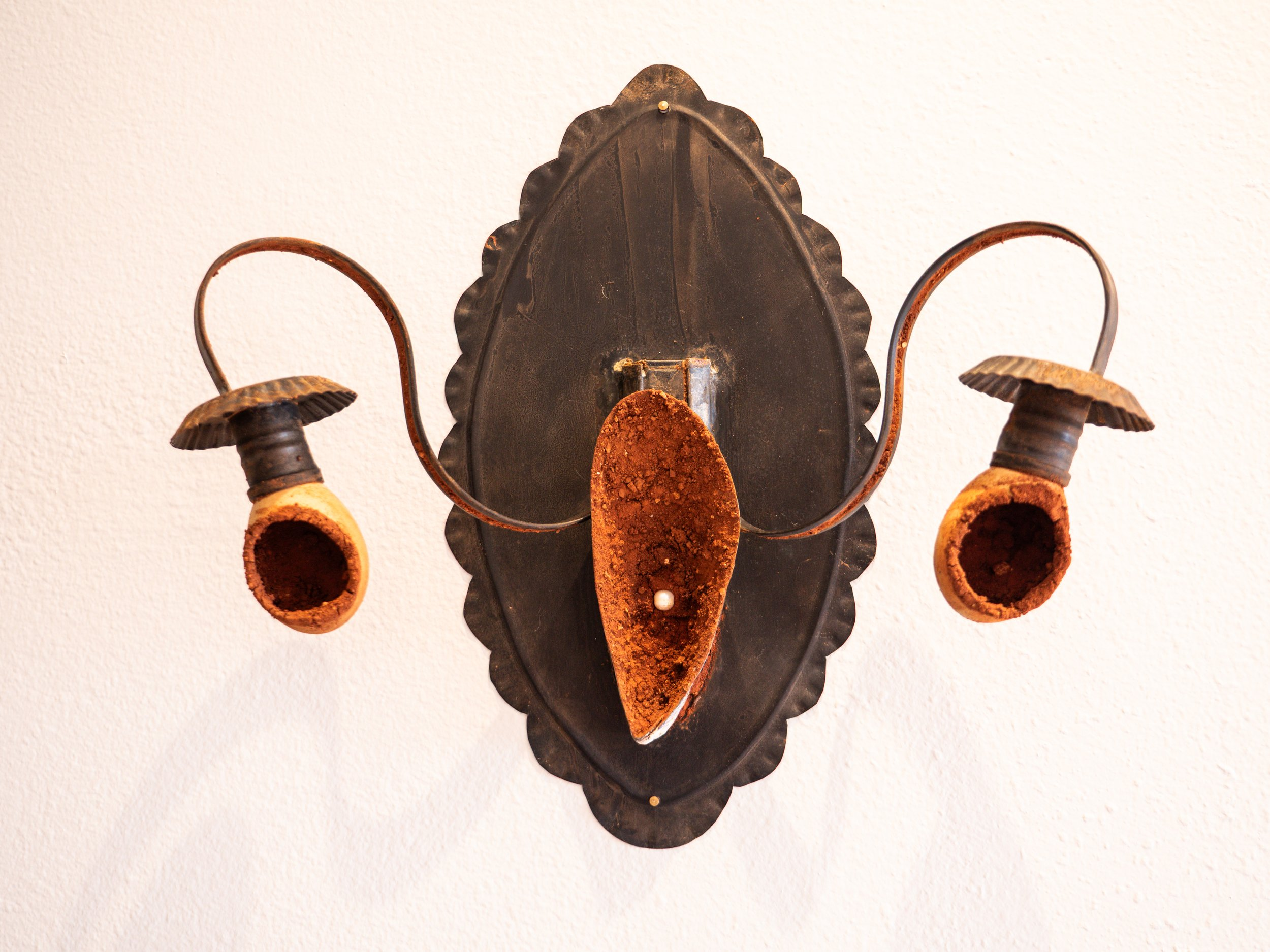
Helena Westra’s work emerges from the physical body, its cycles, limitations, and landscapes. As a ceramicist currently working with limited access to traditional studio space, Helena adapts by building with discarded furniture, sanitary pads, fabric, and household textures. Her sculptures act as soft monuments to exhaustion, rest, and reclamation. Through symbolic forms, plastered garments, plush chairs for ovulating bodies, pinked chainsaws. Helena resists the erasure of women’s pain and insists on the necessity of rest as a form of resistance.
Both artists honor the intimate labor of living. In their practices, survival is not triumphant—it’s vulnerable, circular, sometimes quiet. But it is also creative. Their works ask us not simply how we go on, but how we stay here, as full, flawed, feeling humans.
How to Be Here opens with a reception on Friday, August 1st, from 4–7 PM at Gallery 201. This exhibition is part of Hill Street Country Club’s ongoing curatorial commitment to emerging artists, experimentation, and accessibility in art.
About the artists:
Amanda DiGiovanni, is a San Diego-born multimedia artist whose practice blends sculpture, performance, and photography into immersive, thought-provoking experiences. Her work examines what it means to be human in a constantly shifting world while consistently pushing artistic boundaries and expressions. Amanda DiGiovanni offers an unfiltered, intuitive exploration of mental health’s inner landscape. Incorporating wire, discarded medication bottles, and fractured sculptural elements, her pieces spotlight the lingering marks of survival. Her installations embody memory, grief, and societal stigma, translating the often-clinical language of psychiatric care into a compelling visual vocabulary of truth and resilience. Whether evoking neural networks or gestures of self-comfort, Amanda's work challenges us to reconsider mental illness not as a deviation, but as an intrinsic part of the emotional spectrum of being human.
Helena Westra, who works with earthy materials like clay, dirt and found materials, creates sculptures and land art that speak to ancient symbols and archetypes. Blending land art with spiritual and symbolic themes, her sculptures explore archetypes and the human connection to nature. With this background, her portion of the joint exhibit emerges from the physical body, its cycles, limitations, and landscapes. Navigating the constraints of limited ceramic studio access, Helena turns to unconventional materials such as discarded furniture, sanitary pads, fabric, and domestic textures to construct her forms. Her sculptures become tender monuments to fatigue, restoration, and reclamation. Through the use of symbolic elements including plastered garments, cushioned seating designed for ovulating bodies, and pink chainsaws, she confronts the silencing of women's pain, reframing rest not as passivity but as an act of radical resistance.
