Artist

Marisa DeLuca by Dorian Maldonado

Marisa DeLuca is an Oceanside-based artist whose work delves into themes of home, displacement, and identity through mixed media, including painting, sculpture, and photography. A recent graduate of San Diego State University, Marisa’s art bridges the deeply personal with the universal, offering a lens into the transformative moments of her own life while reflecting on broader social changes.

Her practice is rooted in memory and materiality, often using repurposed and site-specific found objects to tell stories of resilience and loss. Marisa’s recent works have focused on familial spaces and the erasure of community identity, exploring the psychological and socioeconomic impact of displacement on those most vulnerable to the sweeping changes of gentrification.

Read More

Kizzy Sacthell by Dorian Maldonado

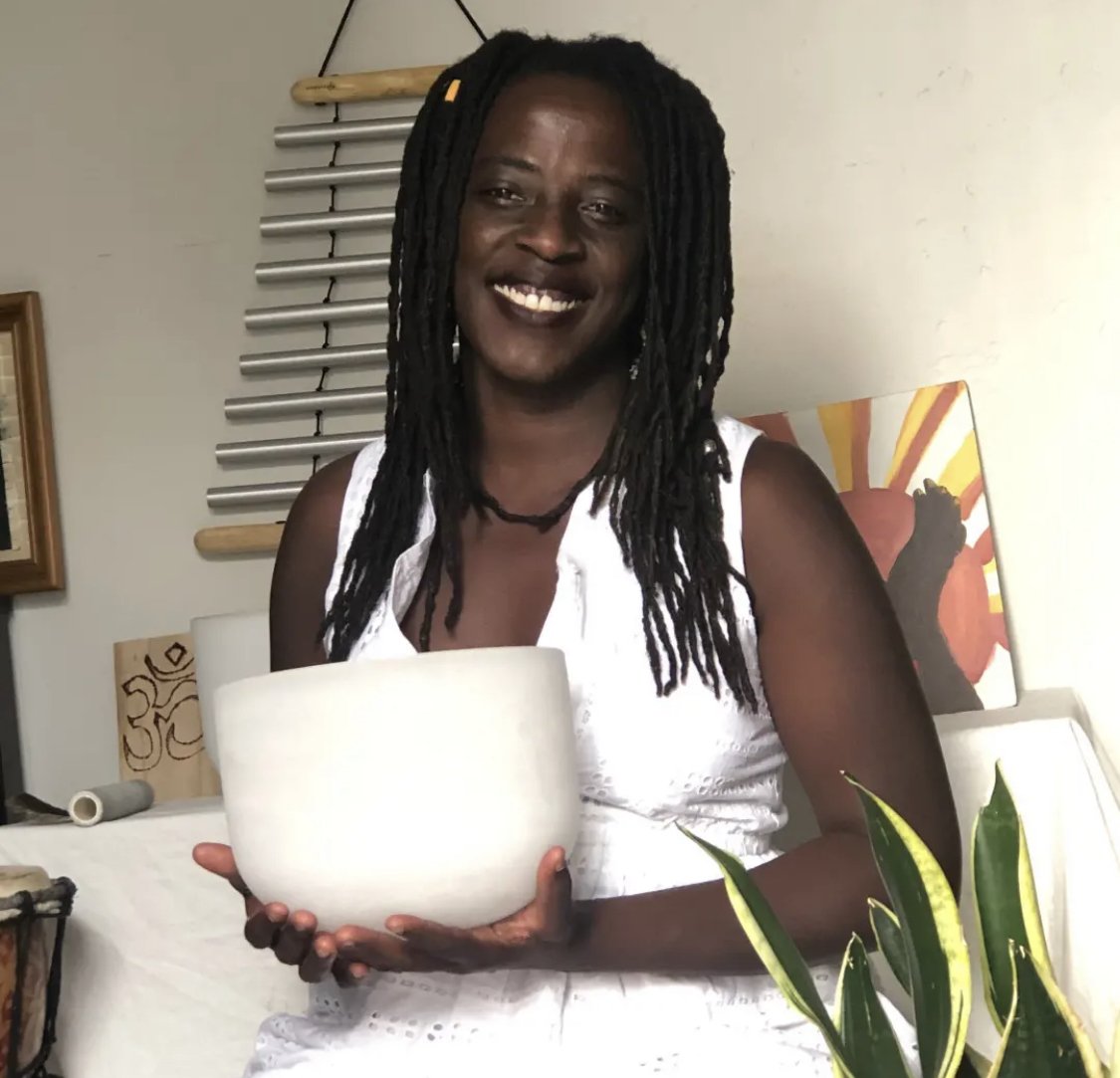
Born in San Diego CA, a preschool teacher and a love child of two parents who were art lovers. Kizzy has been singing ever since the age of 6 years old. From girls’ choir, to show choir, to writing songs and recording them. Kizzy has sang with different roots & culture reggae bands in San Diego. “Music has been instrumental in any healing processes that I have gone through from childhood into adulthood. It still is to this day. Providing a musical worldly curriculum for the children in my class gave them a sense of what the music is like around the globe, while developing other key cognitive skills.

Vanessa Rishel by Dorian Maldonado

Vanessa Rishel is an oil painter and conceptual artist based in South Bay San Diego. Her art practice examines the formation of identity and the exploration of liminal spaces. Rishel's career includes notable residencies and exhibitions, such as at Teros Gallery, Phorm Studio, and Bread & Salt, and her work has been featured in various group shows across San Diego and beyond. Rishel is also recognized for her contributions as a writer, muralist, and live painter.

Read More

Christian Garcia-Olivo by Dorian Maldonado

Christian Garcia-Olivo (b. 1988, Santa Barbara, CA) is a San Diego-based artist known for his innovative exploration of acrylic paint as a sculptural medium. In December 2020, he debuted his first solo show, Untitled 2020, at Bread & Salt in San Diego, setting the stage for a dynamic artistic journey. Christian’s work is featured in the San Diego Civic Art Collection and the Mesa College Library, and he has exhibited his art internationally in Italy and Spain, as well as across Southern California at the San Diego Art Institute, San Diego Central Library Art Gallery, the Museum of Contemporary Art in Santa Barbara and at Permanent Storage Projects in Los Angeles. Christian has received recognition for his contributions to the art world, including an Honorable Mention at the Athenaeum’s 28th Annual Juried Exhibition.

Read More

TARA CENTYBEAR by Margaret Hernandez

TARACENTYBEAR-21.jpg

Tara Centybear, a San Diego native, attended the School of the Art Institute of Chicago where she got her BFA, and Goldsmiths College, University London where she attained her MFA, graduating with Distinction.  In addition to her work as a contemporary artist Centybear has worked as a fine arts curator throughout San Diego for the past decade.  Currently she holds the position of Collections Manager/Curator at the San Diego History Center and is an adjunct teacher in the art department at MiraCosta College. 


Q & A with artist Tara Smith

Why dead birds?

They encapsulate a balance of serenity and loss that I am looking to discuss. Birds, coated in their feathers are almost packaged, presents wrapped in nice colorful paper. I have chosen to work with dead birds, but birds that through their physical form do not reveal or concentrate on the way they died. This is to celebrate the life, not the death of the animal. They are each a symbol of the little deaths we all have throughout our days, weeks, months, years, and decades.  From childhood to when our own end comes. The trauma of being picked on in school, of living through horrid world events, abusive encounters, loss of loved ones, of all the things that happen to us all that inform who we are, and who we become. The paintings are sad to grieve for those traumas, but in their beauty they pay homage to how important each struggle we all go through is.  We need those traumas to become our most interesting, strong, and gorgeous selves. 

The juxtaposition of the perished birds with the other inanimate objects is a way to discuss the clashing of experiences, hiding of pieces of ourselves and so forth. In all my works, for some reason I am not quite sure of I always cover things with other things, put things inside things so that they visually disrupt each other


What is it about birds dead that is so much more beautiful than say a dead squirrel. Why do we identify with that?

Birds have been symbols of ‘other worlds’, the heavens, love, loss, freedom and so much to us humans for centuries.  We are drawn to them at times, afraid of them too. To me, the dead birds are precious and vulnerable to their surroundings, just as we are. Maybe other animals might work, but for me at this time, birds were the only option.

Birds are a symbol of freedom. Is death also freedom or is it just about the contrast of stillness and flight?

Painting flight would be so boring. A painting of a bird in flight is about that one split second in its entire life, whereas painting a dead bird is about its entire life. It is universal and talks about the whole being, the soul, the end, the mortality and shortness of life.  

What is the role of death in your work - or is that secondary?

It is almost more about finding peace, whether living or dead. The still object means such a different thing, than one in motion. So even though I paint dead things it is not about death at all. Each bird is a symbol for one person’s suffering.  The paintings are about life and living it to its fullest, it is acknowledging the complexity of what trauma brings to a person. That there are good things that come from that trauma, whatever your personal trauma(s) is, and that makes the hatred of that trauma hard… when you know it is a part of you now.  If you hated the horrid things you went through you would hate part of yourself.  We can’t hate ourselves and thrive. 


What role does art play in the community and what type public art would like to see more of?

Art has the ability to communicate things that language on its own often fails at. It is a means to discuss and question sometimes incredibly difficult subjects. Art gives us an entry point, a joining link of communication between different demographics, social, and political groups. 

As far as public art, the more site-specific, conceptual, interactive and time specific work in our city the better.  Through these vehicles, artists can inspire new conversations in the community, ask people to question the world around them, and give the public a chance to experience art on their terms. Public art steps out of the museum and gallery walls and has a strength in that it can reach those that still feel, much due to the elitism of the past (and still present to a degree), that museums are not a space for ‘them’.